So I was watching Dave Gorman's show the other day, and on it he mentioned the paradox of magazines such as 'Take a Break' - you know, the ones that are all bright and cheery on the front, but then hold fantastical stories that are as unbelievable as they are horrifying. The headlines are usually bizzare and gruesome in equal measures, and they're stereotypically brought by women as a break from the real world. These sorts of things:

Just in case you can't read some of the taglines, we've got things like
"Mum's Terror: Had devil dog killed my baby?"
"Stepdad got me pregnant at 13"
"Am I crazy? I still love my conman"
"Tragedy of my 5 hour bride dead on her wedding night"
"My fella gave his lover my clothes"
"Starved by my evil friend"
"Proposal from hell: 'marry me, I'm a rapist'"
"This pizza saved my life"
I'm pretty sure you get the picture. Now I hardly ever read these sorts of magazines, or really any magazines for that matter, but if I've been especially bored on school trips abroad I've borrowed one or two from my friends to read. It's pretty clear that the stories are pretty sensationalised, and while I'm not inclined to believe everything that these magazines say, I figure that there must at least be a smaller, plainer story behind all of these tales.
But then I got thinking, which knowing me is never really a good idea. People always seem to be entertained by wild stories, especially ones with unpleasant edges. It made me think of Penny Dreadfuls, which were basically these pamphlets that used to be published just after the commodification of the printing press in the Victorian Age. They detailed horrific crimes, usually murders, that had been committed, and people from all social standings would buy them, despite the pamphlets being marketed more towards the lower classes since they only cost a penny. They looked something like this:
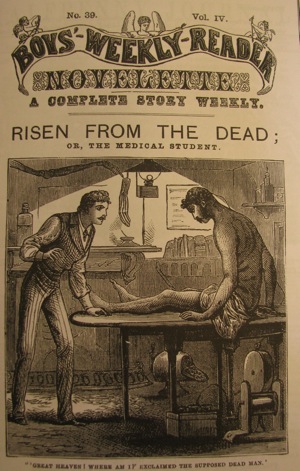

The first cover is from a pamphlet circulated by the 'Boys Weekly Reader', entitled 'Risen from the Dead or, the medical student'. The second, 'Spring heeled Jack, the terror of London' is from 'The Boys Standard'
Now I realise that the nature of these headlines are rather different from one another, with the modern magazines focussing more on social dramas rather than murder, as in Penny Dreadfuls, but considering the climate of today's society, I can't help but think that they serve the same purpose.
Today, we see too much bloody murder on the news to find sensationalised stories about it entertaining, so our media reflects this, giving us the drama that humans inherently seem to feed off in a slightly different way, instead revolving around social taboos and dilemmas. Both of these sorts of publications are designed to entertain through shock or surprise, and also to distract from our own everyday lives by telling us that things 'could be worse'.
All in all, I can't help but think that while Penny Dreadfuls may have died out, the idea behind them and the market for them certainly has not.

No comments:
Post a Comment